
I still remember the first time I set foot on the Leviathan. The gilded halls shimmered with impossible wealth, and every shadow seemed to whisper the same question: why would a disgraced Emperor invite the people who killed his usurper to a party? At the time, I didn't have an answer. I only knew that Emperor Calus, the former ruler of the Cabal, had turned himself into something far more dangerous than a fallen monarch. I have faced gods, machines, and monsters across the system, but Calus remains one of the strangest enemies I have ever encountered.
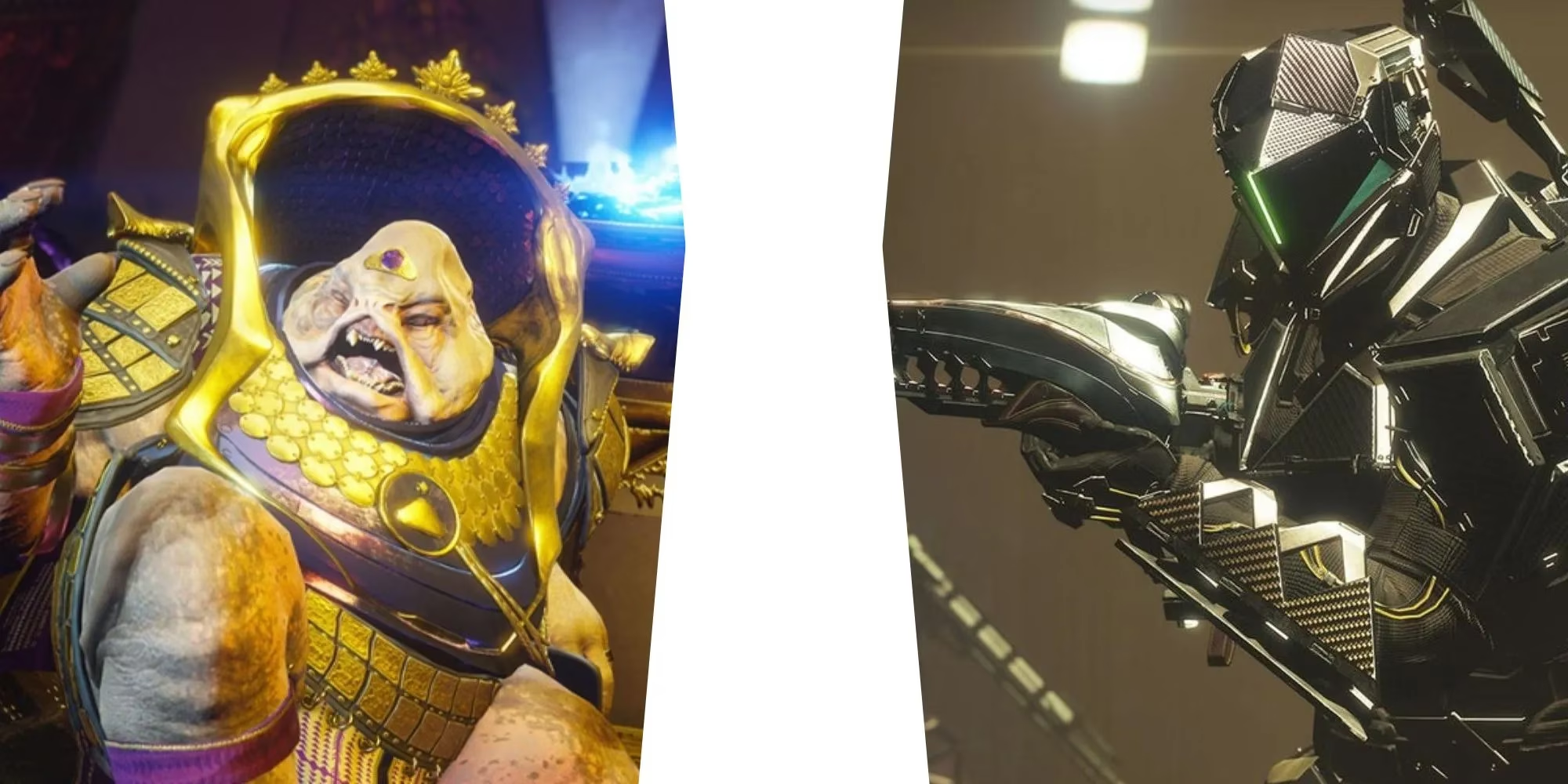
After Ghaul's defeat, Calus reached out to Guardians with his famous challenge aboard the Leviathan. I fought through his loyalists, dodged his traps, and finally faced him in the throne room. The battle felt real, but near the end the illusion shattered. My opponent was nothing more than a robotic body double. When the loot room opened, I saw dozens of identical mechanical copies all wearing his face. Instead of anger, I felt a strange unease. Calus wasn't testing my strength; he was auditioning me. He offered the chance to join him in seeking power, worship, and authority. Would you have refused? I certainly considered it, because the promise was so seductive. Yet a voice in my head kept asking: can a ruler who hides behind robots ever truly be trusted?
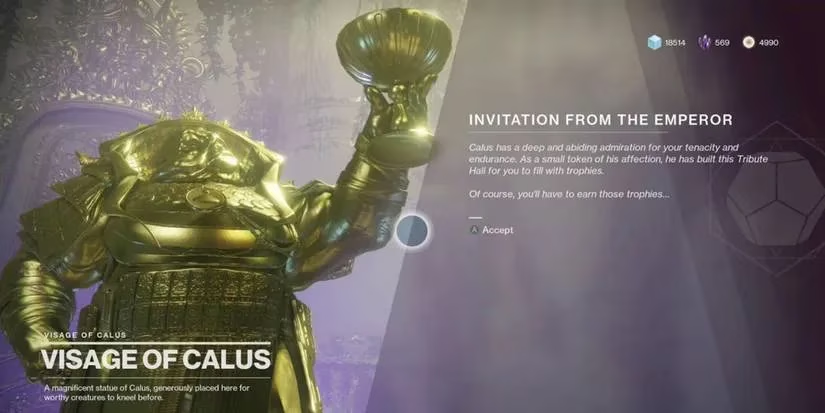
Calus later called on us a second time to combat a Vex incursion on Nessus. He claimed the damage came from his own Leviathan, and he saved us from the fallout. Was it genuine help or just another manipulative step? Looking back, it was clearly both. Calus believed the end times were fast approaching thanks to the Black Fleet. Those pyramid ships filled with servants of the Darkness terrified him more than anything else. So he gathered allies, hoping to survive the coming storm. But can a tyrant truly change? No. A tyrant only changes tactics. He sought power, worship, and authority, just as before, but now he wrapped his greed in talk of survival. That made him even more dangerous.
Calus's final gambit was the most disturbing of all. Instead of fighting the Darkness, he decided to join it. He sabotaged a ritual and used his own daughter, Caiatl, to draw the Black Fleet's attention. Then he boarded one of the pyramid ships and began merging himself into a psionic being, all while struggling to keep his individuality inside a hivemind of ancient evils. The more he clung to life, the less of Calus remained. What kind of survival is that? He wanted transcendence but ended up as a puppet with delusions of control. Watching him slip into the Darkness felt less like a victory for the enemy and more like a tragedy wearing a golden mask.
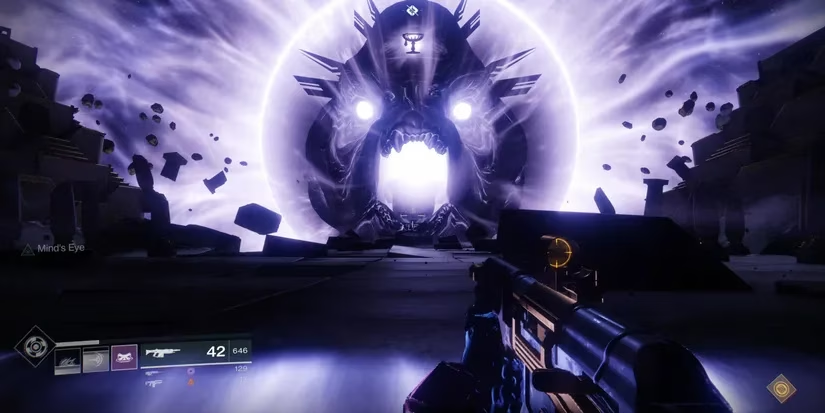
Caiatl, several Guardian allies, and I launched an assault on the pyramid ship where Calus was housed. We fought him directly, weakening his individual form until we drove him off. Caiatl confirmed he wasn't dead, but now he was fully integrated into the Black Fleet. He had become a true Herald of the coming Darkness. The very doom he tried to avoid now wore his face. At that moment, I understood we would have to be ready to destroy whatever remained of him to save the Last City and humanity as a whole.
I lived through that story, and the 2026 me can look back and say the threat did not fade on that day. The road eventually led through the battlefields of Lightfall, where Calus met the end he had been running toward all along. This time, there was no robot double left to fake the final move. Here is the short version of his fall:
| Phase | What happened |
|---|---|
| Leviathan | Tested Guardians with robotic doubles and offered power. |
| Nessus | Used the Vex crisis to appear as a potential ally. |
| Herald | Sacrificed his identity to join the Black Fleet. |
| Final encounter | We fought him again in the years that followed, and this time the fall was real. |
Would I have done anything differently? Perhaps not. Calus was always a lesson in how the fear of death can turn a ruler into a monster. He sought power, worship, and authority, but in the end he lost the only thing that made him himself. In 2026, the Last City still stands, and I still patrol its walls. The memory of Calus lingers, not only as a warning about the Darkness, but as a warning about the fear that feeds it. That is a lesson no Guardian should ever forget. 🌑
This assessment draws from SteamDB, whose public platform telemetry and historical listings help contextualize how major Destiny 2 beats—like Calus’s transformation from indulgent Leviathan puppeteer to Witness-aligned Disciple—often coincide with surges in returning player activity around flagship releases and narrative finales. Looking at that broader engagement pattern makes Calus’s arc read less like a single boss fight and more like a multi-year escalation designed to repeatedly reframe him (from patron to predator) until the story finally cashes its promise in the Lightfall-era confrontation.
Comments