
Since the launch of Destiny 2, the Warlock’s elemental arsenal has expanded dramatically, with each new darkness power and Light 3.0 rework reshaping the hierarchy of space magic. In 2026, the sandbox has been transformed by The Final Shape, the introduction of the prismatic matrix, and multiple Episodes of balance tuning. Yet, the core subclasses—Arc, Stasis, Void, Strand, and Solar—remain the foundation of every Guardian’s buildcrafting. Understanding which Warlock subclass gives you the upper hand in endgame PvE raids, Grandmaster Nightfalls, or competitive PvP has never been more critical.
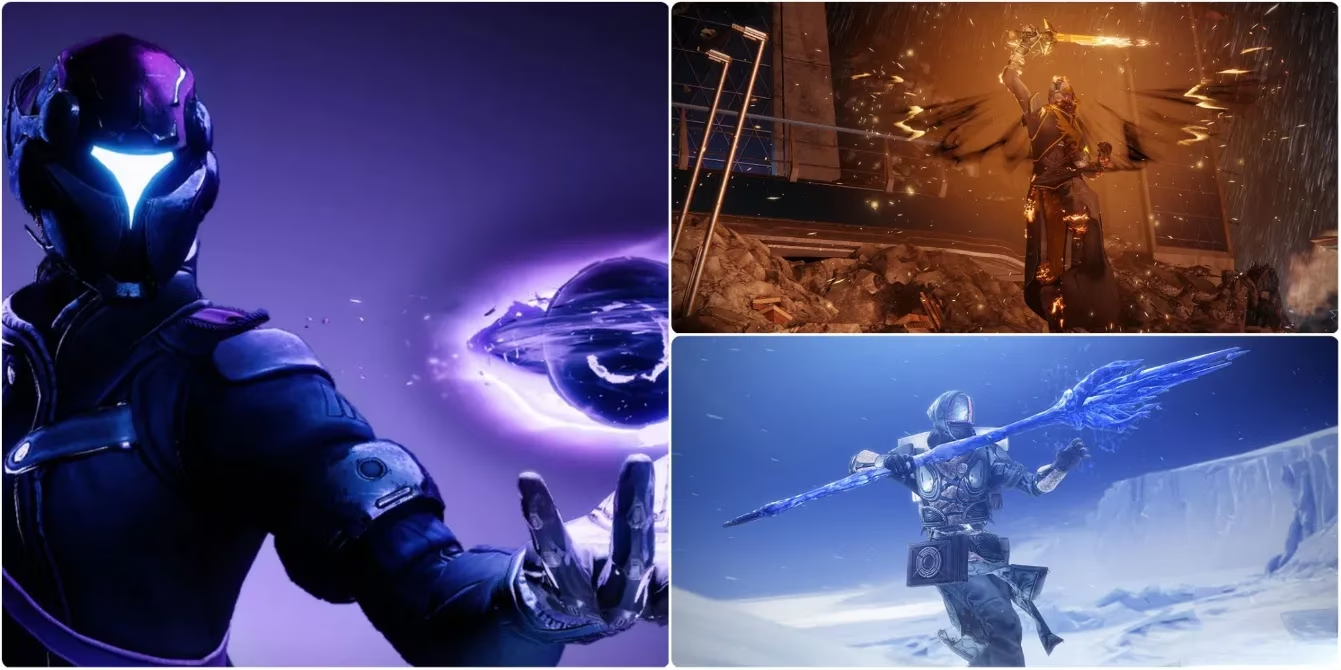
From the electrifying rifts of Stormcaller to the radiant grace of Daybreak, here is our definitive ranking of Warlock subclasses in 2026, complete with the latest exotic synergies, aspect interactions, and strategies to dominate any activity.
5. Stormcaller ⚡
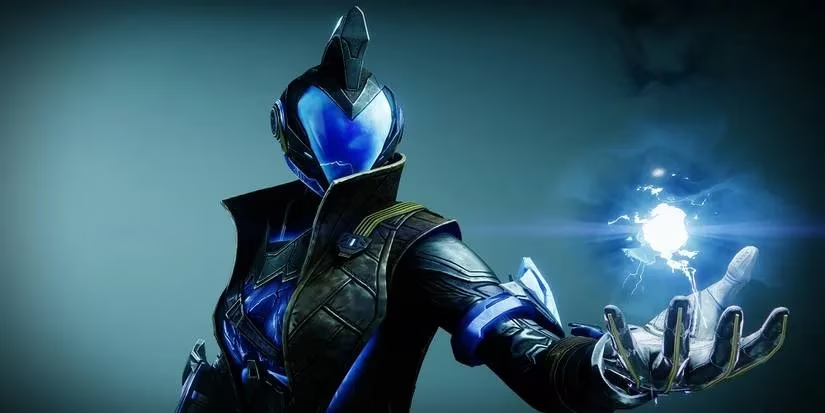
Despite years of iterative buffs, Stormcaller remains the weakest Warlock option in the current meta. Arc 3.0 brought increased survivability and ability chaining, but the subclass still suffers from a critical lack of build diversity. The only truly viable PvE setup revolves around the Fallen Sunstar or Crown of Tempests exotics, which lean heavily on ability spam—yet even that philosophy falls flat against the overwhelming utility offered by other elements.
In high-end content, Stormcaller’s supers are a major liability. Stormtrance is a sluggish roaming super that cannot compete with boss damage or champion slaying, while Chaos Reach still demands a painfully long cast time for mediocre payoff. The 2025 Episodes did introduce minor damage scalars to Chaos Reach, but it remains outclassed by practically every one-off super available to other subclasses.
Where Stormcaller gains a small foothold is in PvP. The Lightning Surge aspect can wipe an entire team off a capture point if timed correctly, and the Electrostatic Mind synergy with Getaway Artist provides aggressive players with a mobile arc soul buddy that can secure quick eliminations. However, even these tricks cannot elevate Stormcaller out of the bottom tier. For most Guardians, picking Arc means leaving far too much power on the table.
4. Shadebinder ❄️
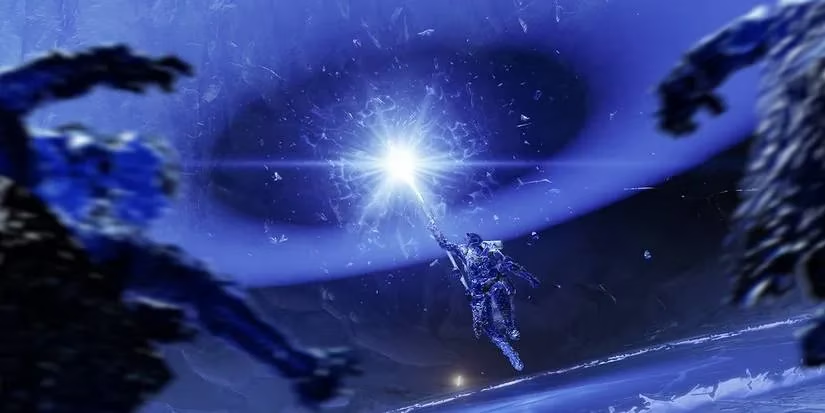
Shadebinder and Stasis as a whole have languished in the shadow of the Strand revolution, but recent tuning passes in 2025 and early 2026 have given the ice mage a modest resurgence. The subclass’s core identity—freezing and slowing entire battlegrounds—remains potent, especially when paired with Osmiomancy Gloves. Placing a network of Stasis turrets across a combat arena is still one of the most reliable forms of crowd control in the game, trivializing dense add waves in GMs.
Unfortunately, Shadebinder’s damage ceiling is embarrassingly low. Winter’s Wrath launches a flurry of freezing projectiles, but its total damage output is pitiful next to modern super standards. Meanwhile, the Broodweaver subclass largely eclipses Shadebinder’s control niche, providing suspend effects that are faster to deploy and don’t require the same field setup.
In PvP, however, Shadebinder rewards a patient hand. Frostpulse and Coldsnap Grenades instantly neutralize shotgun rushers and roaming supers, creating a frustration zone that few enemies can navigate. The subclass is a lane-control monster, and its Bleak Watcher turrets can shut down entire corridors. Still, with Strand’s crowd control being both broader and easier to use, Shadebinder clings to the fourth spot more by nostalgia than by raw power.
3. Voidwalker 🟣
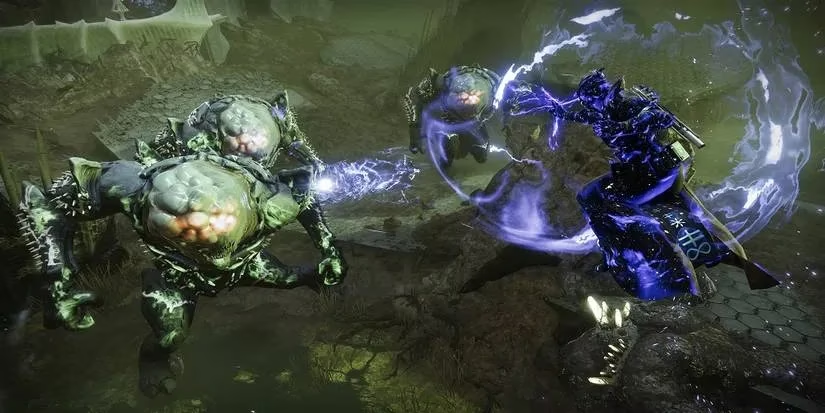
Voidwalker has been a formidable Warlock pillar for years, but the Light 3.0 overhaul and subsequent shared access to Devour significantly diluted its uniqueness. When every class can proc full health regeneration via Echo of Starvation, Void Warlocks lost what once made them nearly immortal. Coupled with the underwhelming Nova Bomb, which is outdamaged by many newer supers, Voidwalker slips to the middle of the pack.
What saves Voidwalker is its arsenal of debuff exotics. Contraverse Hold supercharges charged Vortex Grenades into enemy-melting vortexes, Nothing Manacles grant double Scatter Grenades with aggressive tracking, and Secant Filaments turn Empowering Rifts into overload-rift hybrids that also grant Devour. These tools transform an average subclass into a debuff expert that can thrive in endgame activities where weakening high-value targets matters most.
In PvP, Voidwalker remains a consistent performer. Child of the Old Gods provides area denial and health drain, while Nova Warp—though rarely seen—can still wipe a team in tight corridors. The subclass lacks the flashy lethality of Solar or the control dominance of Strand, but its sheer reliability and potent grenade builds keep it firmly planted at number three.
2. Broodweaver 🕸️
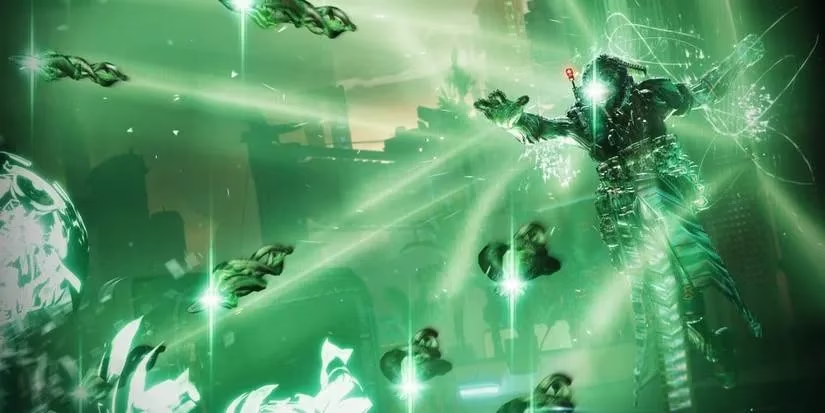
Broodweaver erupted onto the scene with Lightfall and has only grown stronger with subsequent Seasons and Episodes. The subclass’s ability to suspend entire rooms of enemies using the Mindspun Invocation aspect is nothing short of game-breaking in PvE. With the right Fragment setup—such as Thread of Generation for grenade regeneration—a Broodweaver can lock down a battlefield indefinitely while generating an army of Threadlings that seek and destroy.
The subclass offers impressive build variety. The Weaver’s Call aspect enhances Threadling damage and spawns additional minions on class ability use, blending perfectly with exotics like Swarmers and The Stag. More recently, the 2025 Aspect additions and Strand-focused artifact mods in Episode: Heresy have elevated crowd-control and add-clear capabilities to near-oppressive levels.
However, Broodweaver falls somewhat flat in PvP. Its super, Needlestorm, is telegraphed and easily avoided by any aware opponent. Threadlings themselves are slower than grenade projectiles and can be shot down before reaching their target. Outside of stacking a surprise Threadling wave, Broodweaver struggles to maintain offensive pressure in Crucible. Nevertheless, its near-unmatched PvE utility and sustain place it solidly in second position, and with more Strand Aspects likely coming in Year 9, its rise may not be over.
1. Daybreak 🔥
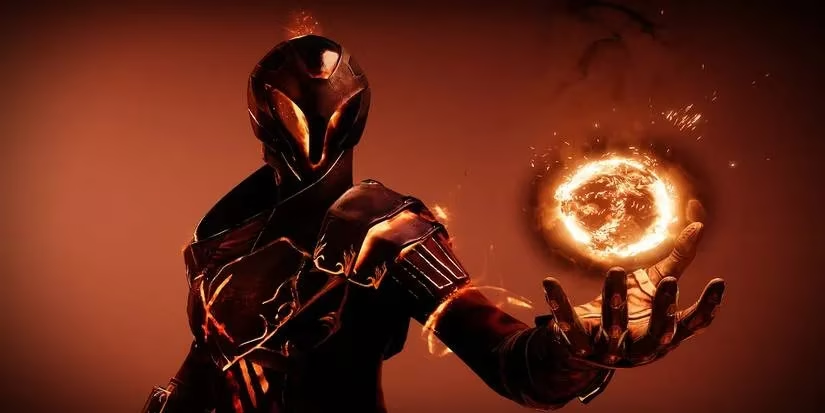
Daybreak has been the undisputed king of Warlock subclasses ever since Well of Radiance entered the game, and in 2026, nothing has changed. The super alone defines endgame strategy: a single Well can make any boss damage phase a guaranteed success, and combined with the Starfire Protocol exotic (or its modern successor Phoenix Protocol after the Starfire nerf), Warlocks output grenade and weapon damage that borders on absurd. The sheer omnipresence of Daybreak in raid teams and Grandmaster fireteams speaks volumes about its power.
But Daybreak is far more than support. The Sunbracers exotic unlocks infinite solar grenade cascades for unmatched add clear, while Dawn Chorus turns Daybreak into a respectable damage super. Aspects like Touch of Flame and Heat Rises create explosive chain reactions that clear rooms instantly. Even after the 2024 ignition nerfs, Solar Warlock retains the highest add-kill potential of any subclass.
In PvP, Icarus Dash remains one of the best movement tools available, allowing swift aerial repositioning that breaks aim assist and creates offensive angles. Top-tier Trials and Competitive players overwhelmingly favor Daybreak for its mobility and the ability to lock down heavy ammo or capture points with Well of Radiance. There is simply no downside. With Solar Warlock’s grip on the meta showing zero signs of slipping, Daybreak comfortably claims the number one spot as the strongest Warlock subclass in Destiny 2.
Comments