
A shadow has hung over the Destiny 2 community for several years—a peculiar, maddening issue where the game's core damage calculations and physics behavior warp unpredictably depending on a player's frame rate. While live-service titles often suffer fleeting bugs, this particular problem has persisted far beyond what many consider acceptable, evolving from a curiosity into a full-blown controversy. In 2026, Guardians continue to demand answers, their patience stretched thin by inconsistent explanations and a remedy that never truly arrived.
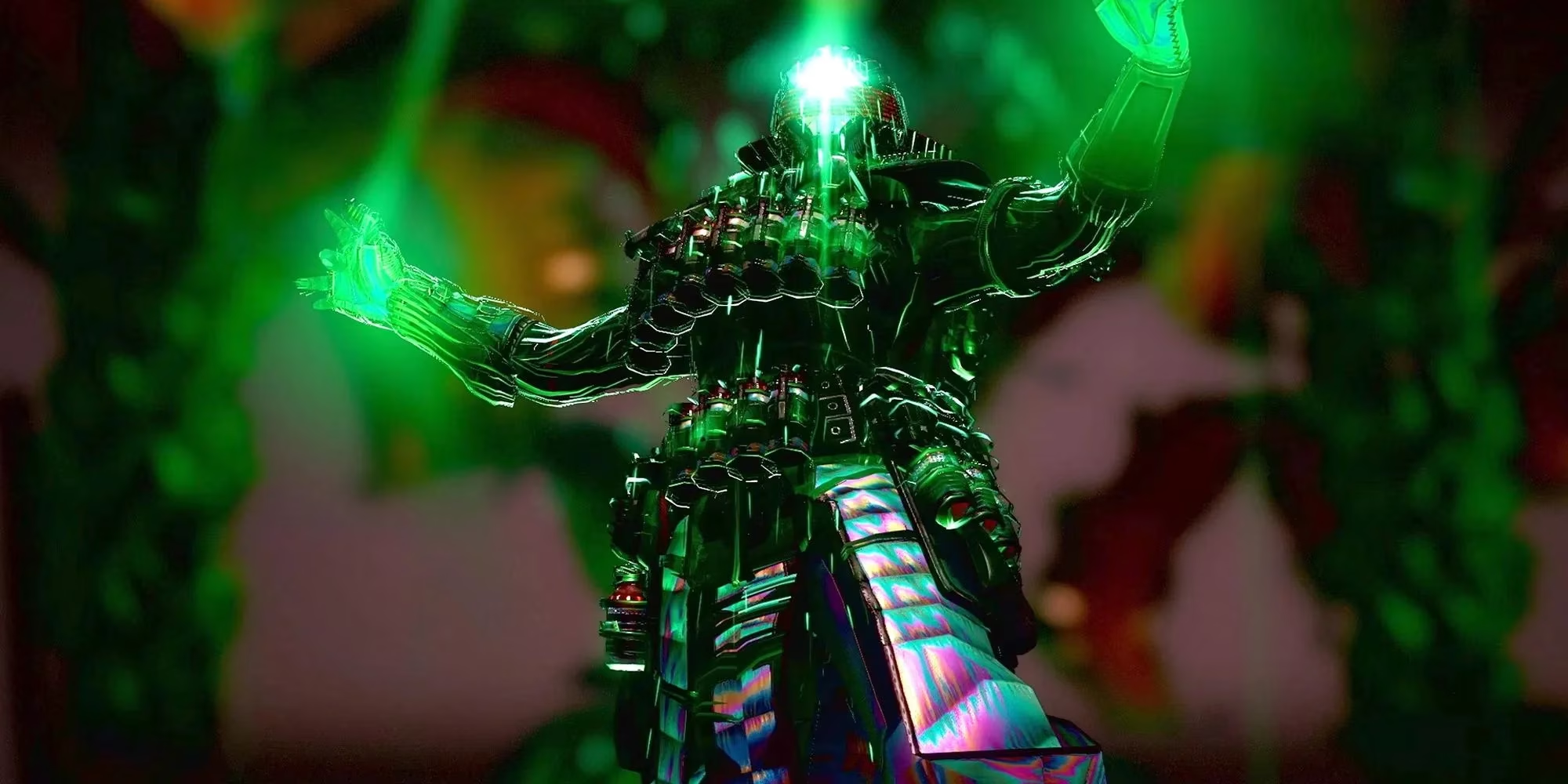
The saga began quietly enough. Observant players noticed that their survivability seemed to fluctuate between sessions, ultimately tracing the variable to frame rate settings. The most infamous early example involved Scorn snipers in certain activities: at 60 frames per second, their shots delivered devastating damage capable of one-shotting a Guardian, while at 30 frames per second, the same attack became significantly less lethal. This discrepancy defied all logic of game balance, revealing a deeply embedded flaw in how Destiny 2’s engine interprets incoming damage relative to rendering speed.
Bungie acknowledged the issue at the time and deployed a temporary patch that targeted the Scorn sniper outlier, but the community’s sense of relief was short-lived. Subsequent investigations uncovered a broader vulnerability. Enemies like Threshers, Ogre eye beams, and Colossus miniguns all exhibited the same pattern—dealing noticeably higher damage to players enjoying smoother frame rates. A post on the Destiny subreddit methodically documented these findings, comparing damage numbers at 30 and 60 fps side by side. The evidence was incontrovertible: the problem was not isolated to a single enemy type but was instead a systemic flaw baked into the game’s architecture.
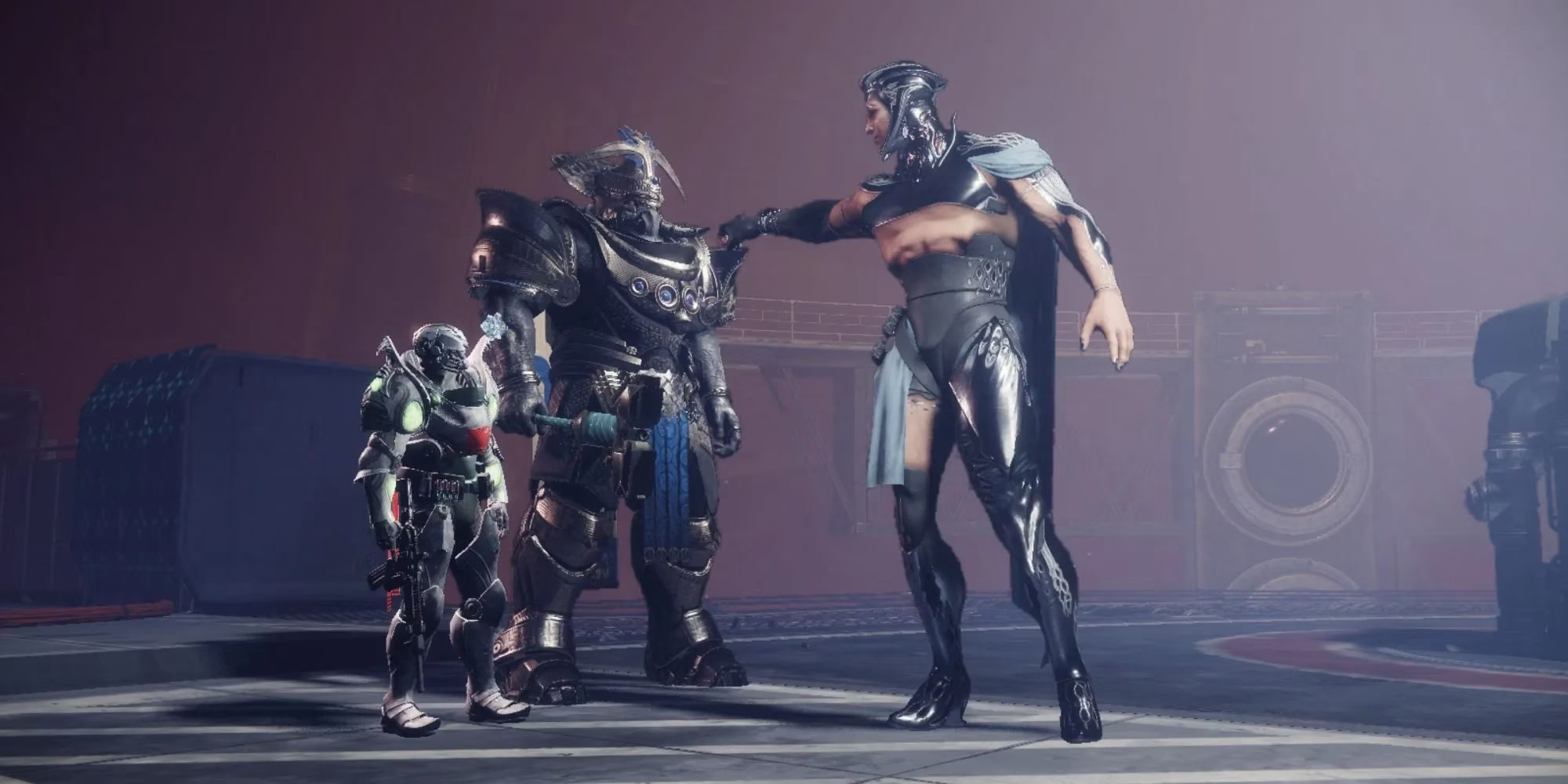
The release of the Lightfall expansion in early 2023 magnified these troubles dramatically. As players ventured into Neptune’s neon-drenched landscapes, fresh frame-rate-related bugs surfaced that went beyond simple damage scaling. In the Root of Nightmares raid, the second encounter required Guardians to be launched across platforms by environmental mechanics. Those running the game at 60 frames per second found themselves catapulted with far greater velocity than intended, often slamming into walls at lethal speeds. This physics distortion turned what should have been a coordinated traversal puzzle into a deadly lottery, undermining the integrity of high-end content.
Numerous other anomalies tied to frame rate surfaced during the same period. Movement abilities sometimes behaved erratically, certain platforming sections felt misaligned, and enemy projectile tracking seemed to intensify at higher refresh rates. The combination of these issues painted a picture of an engine struggling to maintain consistency across the hardware spectrum, with player experience diverging wildly based on a simple settings toggle.
Community managers once assured the player base that the developer team was actively investigating the root cause, but those statements now echo from a distant past—over three years old as of 2026. Despite subsequent expansions, seasonal updates, and countless patches targeting other bugs, the core frame rate dilemma remains largely untouched. Guardians continue to swap tests and empirical data, proving that in the current build, a 120 fps player absorbs more punishment from identical enemy attacks than a 30 fps counterpart. For a game that prides itself on precision gunplay and fair competition, this enduring disparity feels like a betrayal of foundational design principles.
The silence from Bungie on the matter has become a rallying cry. Players argue that a bug capable of arbitrarily punishing high-performance hardware should be assigned the highest priority, yet it languishes in limbo alongside other persistent issues. Theories abound: perhaps the engine’s damage-tick system is tied to frame updates rather than a fixed time interval, or maybe netcode synchronization logic inadvertently multiplies impact events. Whatever the technical explanation, the community’s sentiment is clear—after more than three years of intermittent frustration, a thorough and permanent fix is overdue.
The situation underscores a broader challenge facing Destiny 2 as it ages. The game’s engine, while visually impressive, shows its strain under years of layered content and evolving hardware standards. Each expansion adds complexity, and with it, the risk of dormant bugs reawakening in new forms. For many veterans, the frame rate bug has become emblematic of a development cycle that prioritizes new offerings over fundamental polish.
Yet the passion persists precisely because players care deeply about the world Bungie has created. They log in daily, mastering raids and perfecting builds, all while hoping that the next patch notes will finally include the line they have long waited for. In 2026, the demand for an explanation—and a resolution—has never been louder, and the ball remains squarely in Bungie’s court.
Comments