
As a dedicated Guardian who has spent countless hours perfecting my look in the Tower, I found myself immediately drawn to the cosmetic changes that arrived with The Final Shape in 2026. This expansion, heralded as a narrative masterpiece, also ushered in a subtle yet seismic shift in one of Destiny 2's most cherished systems: Shaders. The familiar four-color grid that had defined our customization for years was gone, replaced with new preview images aimed at better representing each Shader's true appearance. While Bungie's intent was clear—to make previewing and selecting Shaders more intuitive—this well-intentioned update has ignited a fiery debate within the community. Was this a necessary evolution for fashion, or a disruptive change that has created more problems than it solved?
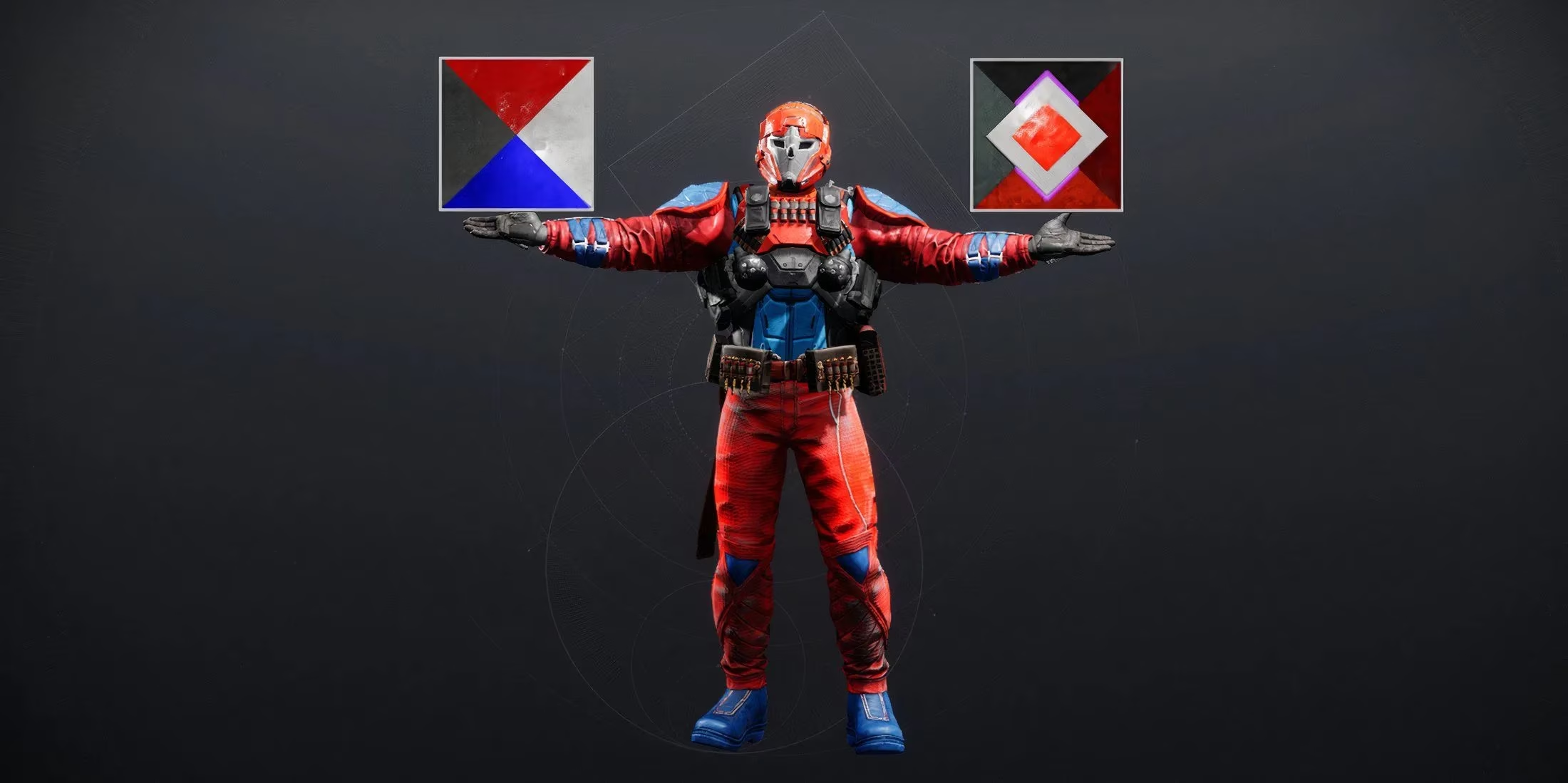
The core of the controversy lies in the execution. For years, fashion enthusiasts like myself have pleaded for more accurate Shader previews. The old system was notoriously unreliable; the four squares often bore little resemblance to how a Shader would actually look on a specific piece of armor or weapon. You'd collect a Shader called 'Midnight Smith,' expecting deep blacks and crimson, only to find it applied a surprising amount of bronze. The new icons in The Final Shape directly address this. They now showcase the dominant colors, textures, and patterns more faithfully. This is undeniably a positive step. No longer must we blindly apply a Shader to every piece of gear in our inventory to see its true effect. But, does this new clarity come at too high a cost?
Herein lies the first major point of contention. The change was implemented universally and abruptly. Overnight, the visual language we had used for nearly a decade to instantly recognize our favorite Shaders was rendered obsolete. My mental catalog—where 'Atmospheric Glow' was a specific arrangement of four colored squares—was suddenly useless. The new icons, while more accurate, are visually homogenized and lack the instant, glyph-like recognition of the old system. This has made navigating what is often a collection of hundreds of Shaters a confusing and time-consuming process. It raises a fundamental question: if the goal was to improve usability, why was this overhaul not paired with the inventory management tools we desperately need?
This leads me to the second, and perhaps more critical, issue this update has exposed: the archaic state of Destiny 2's transmog system. The Shader overhaul has acted like a spotlight, illuminating the system's glaring deficiencies. Our only tool for organization is a simplistic 'Favorites' system. With the old icons gone, finding a specific Shader in a sea of unfamiliar images feels like searching for a needle in a haystack. The community's response has been loud and clear. We don't just need better previews; we need a way to manage our collections.
Let's break down what the fashion community is asking for now, more than ever:
-
Sorting & Filtering: Basic options to sort by color, rarity, acquisition date, or name.
-
Custom Folders/Tags: Allow players to create their own categories like 'Solar Themes,' 'Clean Metallics,' or 'Raid Shaders.'
-
Search Functionality: A simple text search bar for our collections.
-
Mass Application: The ability to apply a Shader to an entire armor set at once.
Without these features, the improved accuracy of the new icons feels like only half a solution. It's as if Bungie gave us a sharper lens to view a disorganized library but didn't provide any bookshelves or a cataloging system.
It's fascinating to observe the power of Destiny 2's fashion community. This is the same group that championed the 'Best Dressed' Commendation, a feature that helped salvage the game's social endorsement system. Now, they are once again driving the conversation, using this controversy to advocate for deeper, systemic improvements. The Shader change was a long-overdue response to their feedback, but its implementation has shown that cosmetic customization needs a holistic rethink, not a piecemeal update.
So, where does this leave us in 2026? As I've spent more time with The Final Shape, the initial jarring sensation has begun to fade. I am slowly rebuilding my mental map of Shaders, associating names with new images. The accuracy is appreciated, especially when trying to craft a specific look for my Guardian. However, the frustration of a cluttered, unmanageable inventory remains a constant irritation.
Ultimately, the new Shader system is a microcosm of a larger development philosophy. It addresses a specific, long-standing request but does so in isolation, inadvertently highlighting adjacent systems that are lagging behind. For a game that places such a high value on player expression and 'fashion endgame,' this feels like a missed opportunity to deliver a truly transformative quality-of-life update. The overhaul was necessary, but it's merely the first step. The true test will be whether Bungie listens to the renewed calls for a complete transmog system revamp. After all, what's the point of having perfectly accurate previews if you can't find the Shader you're looking for? The ball is now in their court to finish what they started and give the Guardians of the Last City the wardrobe management system they deserve.
Comments