
As 2026 approaches, Destiny 2: The Final Shape stands as the monumental culmination of a decade-long saga, carrying the weight of expectations from millions of Guardians. Within every player, there exists a duality of perspective—one analytical voice scrutinizes every narrative beat, every line of dialogue, demanding a conclusion worthy of the journey, while another, more emotional voice simply chants with childlike glee at the return of a beloved friend: Cayde-6 is back. This internal conflict mirrors the expansion's own delicate balancing act between epic conclusion and heartfelt character reunion. The resurrection of Cayde, a move that could have easily crumbled under the weight of fan-service clichés, instead becomes the narrative keystone, a masterfully executed pivot that elevates the entire emotional architecture of Destiny's endgame.
The fear that Cayde's return would be a hollow marketing ploy, a mere nostalgic lure like a faded carnival poster, was palpable. In an era where media often resurrects characters with the subtlety of a sledgehammer, treating them as disposable plot devices, the concern was valid. Yet, The Final Shape subverts this entirely. Cayde is not a shiny pair of keys jangling to attract lapsed players; he is the essential catalyst, the emotional fulcrum upon which the final arcs of the Vanguard pivot. His presence is less a simple return and more like a master key suddenly rediscovered, one that unlocks long-sealed chambers of grief, guilt, and purpose within his comrades.
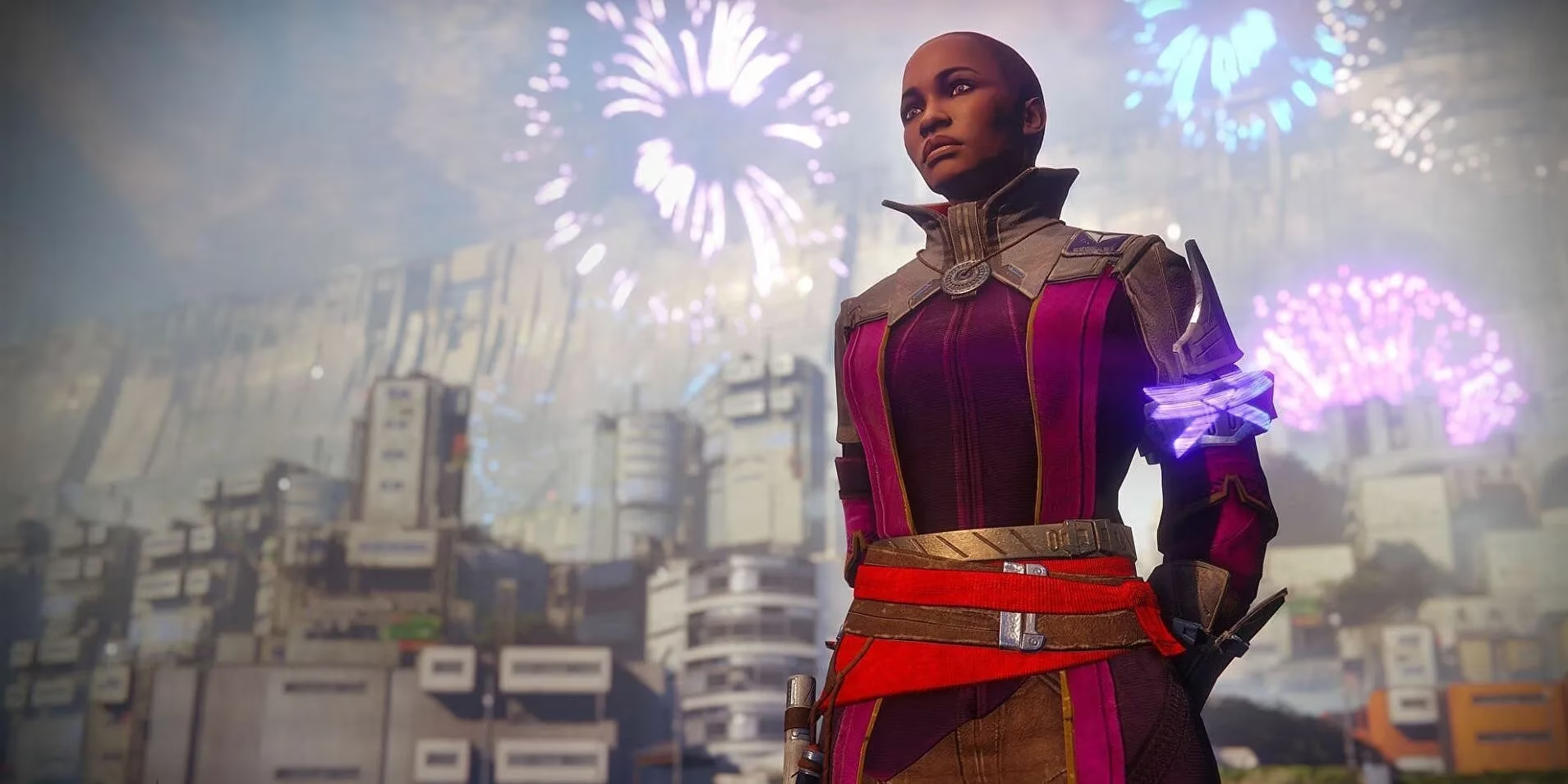
For Ikora Rey, Cayde's reappearance is a seismic event that shatters her carefully maintained composure. Her journey has been shadowed by the guilt of his death, a burden made manifest by Nightmares that taunted her with his accusatory ghost. Their reunion is one of the campaign's most raw and powerful moments. It begins with rejection—Ikora, the seasoned strategist, suspects a trick of The Witness. When the truth dawns, it unleashes a torrent of pent-up anger and sorrow, a cathartic release of words left unsaid for six years. Cayde, carrying his own guilt for breaking his promise to work as part of the team, meets her not with his trademark levity, but with renewed commitment. His promise to fight alongside the Vanguard heals one of Ikora's deepest wounds, mending a fracture in the leadership that had persisted since the Forsaken era.
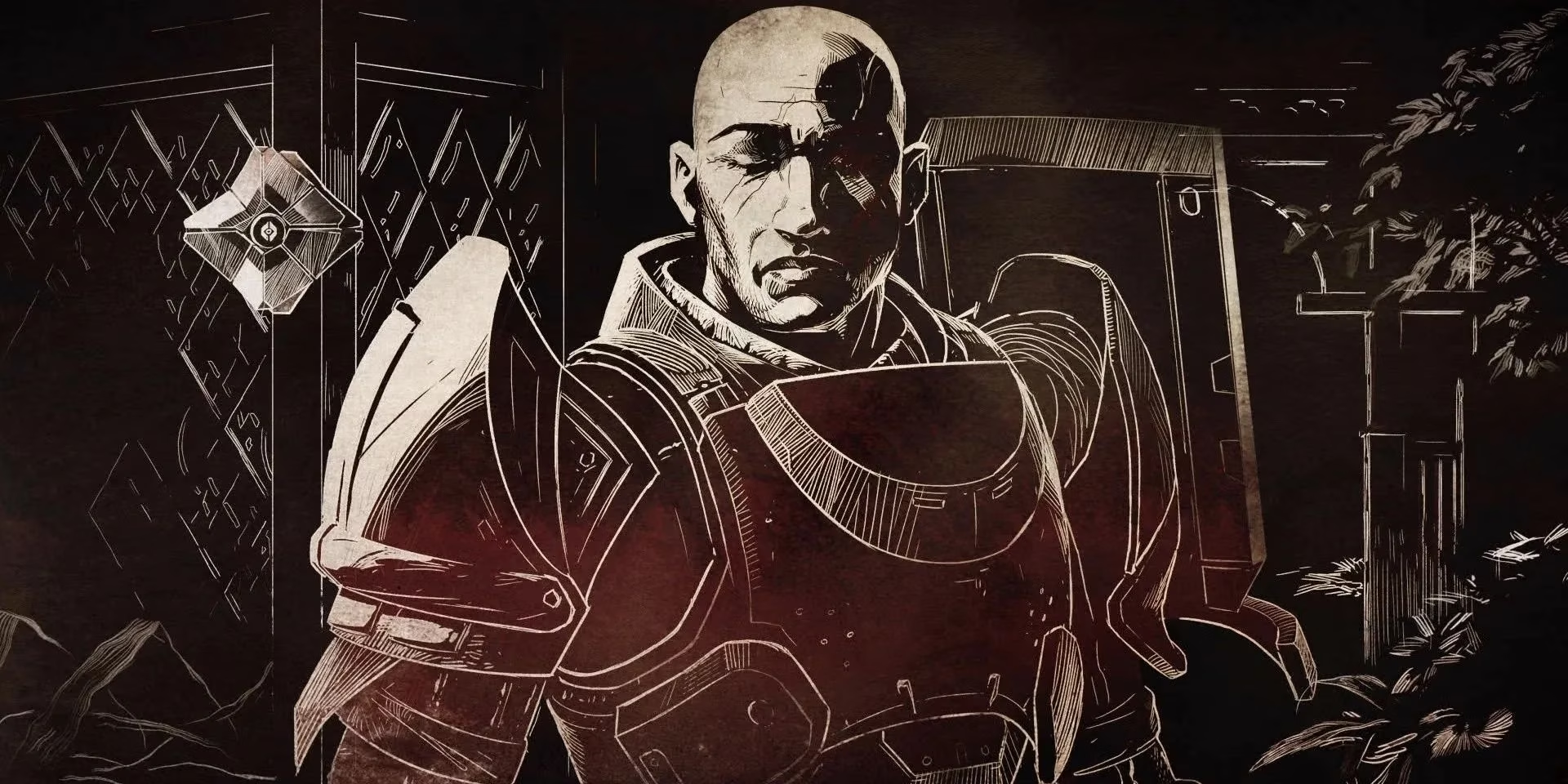
For Commander Zavala, Cayde's return acts as the final, paradoxical weight on the scale of his faith. Zavala has been undergoing a quiet apostasy, his belief in the Traveler eroded by personal loss and unanswered prayers. While he welcomes Cayde back with open arms, the resurrection becomes a twisting of the knife. If a wish, not the divine will of the Traveler, can bring back a friend, what does that say about the god he has served for centuries? Cayde's presence during Zavala's final turn away from the Light is crucial. Seeing this transformation through the eyes of someone who only ever knew Zavala as an unwavering pillar of conviction—like watching a mighty redwood begin to smolder from within—adds profound gravity to his fall. It underscores that this is not a mere strategic shift, but the collapse of a fundamental identity.
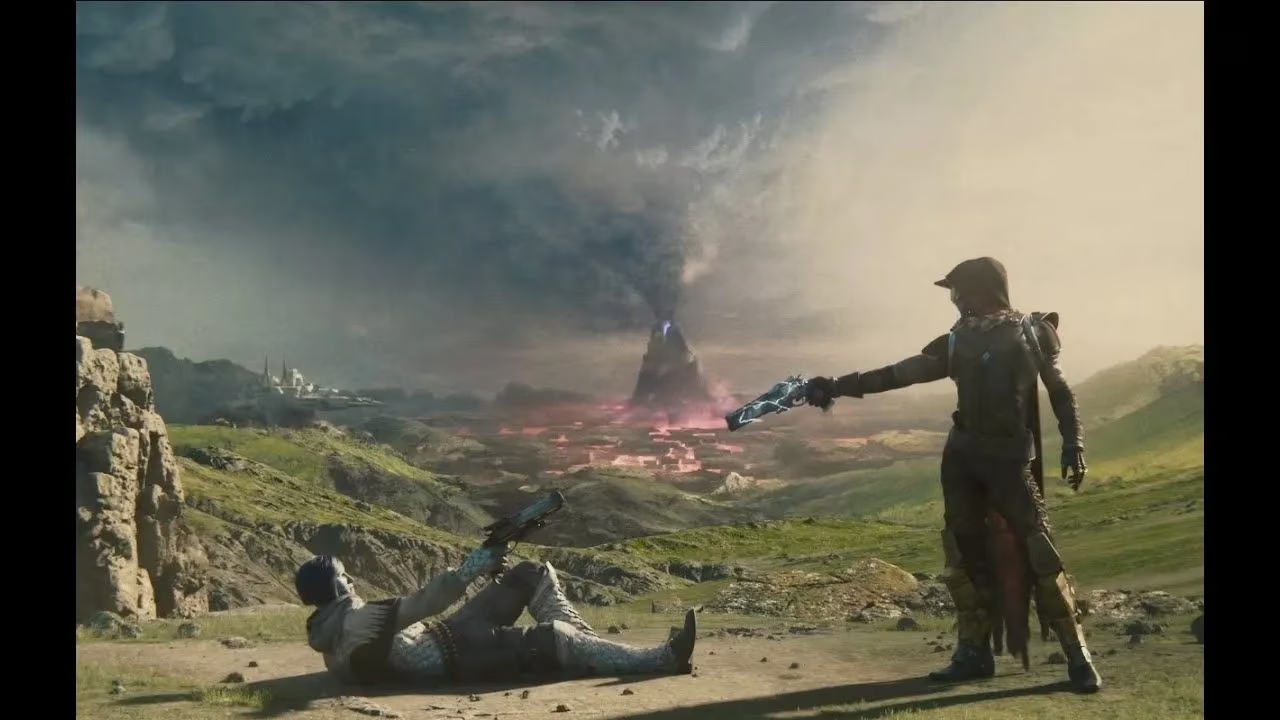
The character most fundamentally transformed by Cayde's return is Crow. In a brilliant narrative twist, it is revealed that Cayde's resurrection was not an act of the Traveler or the Witness, but the result of Crow's own desperate wish—a poignant full-circle moment for the character whose journey began as Cayde's killer. Crow's path has been Destiny 2's central protagonist arc since Forsaken, a long and painful road from reviled Lightbearer to reluctant leader. His trajectory always pointed toward assuming the vacant role of Hunter Vanguard, yet he could never fully claim that mantle, haunted by the ghost of the man he once was and the man he replaced.
The post-campaign mission Wild Card serves as the exquisite capstone to both their stories. The brotherhood that forms between Cayde and Crow is a highlight of The Final Shape, a relationship built not on forgotten history, but on present understanding. Cayde imparts his final, most important lesson to Crow: that leadership is not just about the fight, but about living—finding joy, connection, and purpose beyond the battlefield. In a moment of profound grace, Cayde then officially passes the mantle of Hunter Vanguard to Crow. This act is not a dismissal, but an act of forgiveness and the highest respect. It is the blessing Crow needed at the precise moment he was finally ready to receive it, completing his redemption arc with a perfection that felt both earned and deeply moving.
Throughout it all, Cayde-6 himself is written and performed with a deft hand that avoids the pitfalls of legacy character writing. Nathan Fillion slips back into the role as if no time has passed, delivering dialogue that crackles with the character's familiar humor and heart without ever devolving into fan-service parody. He is never superfluous; even his jokes serve to puncture tension or reveal character. His reintegration into the Vanguard dynamic feels organic, a reminder that he was always the beating heart of the group, the chaotic counterbalance to Ikora's wisdom and Zavala's stoicism.
In the end, Cayde-6's return in The Final Shape achieves something remarkable. It transforms what could have been a cheap narrative trick into the very engine of thematic resolution. His resurrection acts like a prism held to the light of the saga's finale, refracting a single beam into the distinct spectral colors of each main character's final journey:
-
For Ikora: Catharsis and the healing of old wounds.
-
For Zavala: The final catalyst for a crisis of faith.
-
For Crow: Redemption, forgiveness, and the passing of a legacy.
As the Destiny saga moves beyond The Final Shape and into its new Episodes era in 2026, the handling of Cayde-6 sets a high bar for meaningful character work. It proves that even the most seemingly fan-driven desires can be woven into a narrative with integrity, purpose, and profound emotional impact. His return was not about undoing a death, but about using that miraculous second chance to give others—and the story itself—the closure they needed to finally move forward. If a series has ever made a dead character's resurrection more meaningful than this, it remains a story yet untold.
Comments